
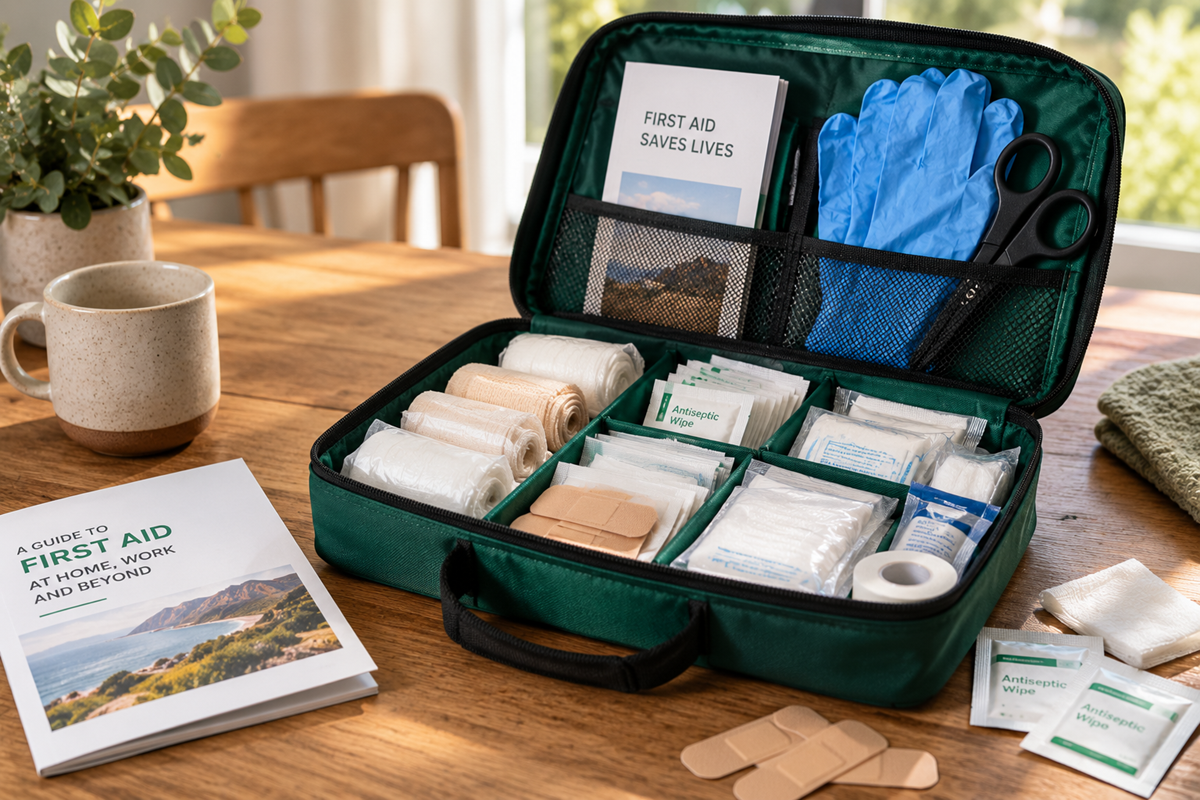

If you are buying first aid kits for a home, workplace, vehicle, or shared facility, the wrong choice is easy to make and expensive to fix. A kit that looks complete on the shelf can still be the wrong size, the wrong contents, or the wrong fit for the hazards people actually face.
In Australia, that matters. Safe Work Australia requires workplaces to provide access to at least one first aid kit, trained first aiders, and the right facilities for the risks on site. That means the real question is not just, “Do we have a kit?” It is, “Do we have the right kit in the right place, with the right supplies for the job?”
This guide breaks down what to look for, how to match a kit to your setting, and when a standard kit is not enough. If you are comparing options for a low-risk office, a trade environment, a remote site, or a public-facing workplace, this will help you buy with confidence.
What to look for in a first aid kit
A good kit does three things well: it is easy to reach, it matches the likely injury risks, and it can be restocked without guesswork.
1. Size and portability
A small kit can work for a car, desk, or compact team. A larger kit is usually better for workplaces with multiple rooms, multiple floors, or higher injury risk. If people move around the site, a portable kit is often more useful than a single fixed box.
2. Contents matched to the hazard profile
The right contents depend on what people are exposed to. For example:
- offices need a basic trauma and wound care mix
- kitchens and workshops need burn treatment and cut care
- sites with tools or machinery need extra bleeding control supplies
- remote or high-risk workplaces need more than a minimal domestic-style kit
3. Durability and packaging
A kit should protect supplies from dust, moisture, and rough handling. Hard cases, wall-mounted cabinets, and grab bags all have a place, but the format should suit the environment. A kit stored in a vehicle, for example, needs to tolerate heat and movement better than one in an air-conditioned office.
4. Clear contents list and replacement system
A useful kit includes a visible contents list so people can see what is missing after use. That matters because the real failure point is often not the original purchase, but the delayed restock after an incident.
The best kit is not the one with the most items. It is the one people can find quickly and use without hesitation.
In practice, that means buyers should treat first aid kits as a risk-control item, not an office consumable. The hazard profile decides the contents, and the workflow decides the format.
Workplace first aid kits and compliance
For workplaces, compliance is the starting point, not the finish line. Australian WHS guidance says every workplace must have access to at least one first aid kit, and the kit must be accessible, maintained, and appropriate to the level of risk.
What the guidance expects
Safe Work Australia’s code of practice points to a few non-negotiables:
- at least one accessible first aid kit for all workers
- first aiders who are trained and available
- kit locations that are easy to find and reach quickly
- contents that reflect the hazards on site
- regular checks and prompt replacement of used items
How this changes the buying decision
A low-risk office may only need a basic kit, but the moment the environment changes, so do the contents. A warehouse, workshop, school, clinic, hospitality venue, or transport fleet can all need more coverage than a standard office pack. The higher the risk, the more important it becomes to spread kits across the site rather than rely on one central location.
A simple rule of thumb
If staff need to walk a long way, wait for access approval, or search through multiple rooms before they can reach the kit, the setup is not good enough.
| Workplace type | What the kit needs | Why it matters |
| Office | Basic wound care, gloves, dressings | Covers common minor incidents |
| Workshop or trade site | More burn, cut, and bleeding supplies | Hazards are more severe and immediate |
| Vehicle or mobile workforce | Compact, portable kit | The vehicle is the workplace |
| Remote or high-risk site | Expanded contents and backups | Help may not arrive quickly |
The key point is simple: compliance tells you the floor, not the ceiling. A compliant kit can still be inadequate if it is understocked, poorly placed, or wrong for the site.
Choosing the right kit by environment
The fastest way to choose a kit is to work backwards from the environment.
Low-risk office or admin setting
A basic first aid kit is usually enough if the main risks are slips, minor cuts, paper cuts, or small burns from common equipment. Look for a compact kit that still includes gloves, dressings, saline, tape, scissors, and basic wound care items.
Education, hospitality, and public-facing sites
These environments need broader coverage because the number of people using the space is often higher, and incidents are less predictable. Eyewash access, burn care, and enough consumables for repeated use are important.
Trade, industrial, and manufacturing settings
These sites should not rely on a bare-minimum pack. Machinery, tools, heat, chemicals, and manual handling injuries all increase the chance that a simple kit will be underpowered. Higher bleed control, larger dressings, and stronger packaging become more important.
Remote and regional workplaces
Distance changes everything. When ambulance access is slow, the kit needs to support longer treatment times and more serious incidents before help arrives. That usually means extra consumables, better packaging, and a stronger replenishment system.
Vehicles and mobile workers
If the vehicle is the workplace, the kit has to travel with it. It should be compact, easy to reach, and designed to stay intact during movement and heat exposure. In practice, this is where a purpose-built portable kit matters more than a general-purpose box.
The most common mistake is buying one kit type for every environment. That sounds efficient, but it usually creates the wrong balance of size, access, and contents. Matching the kit to the setting is what makes it useful.
| Environment | Recommended focus |
| Office | Compact, compliant basics |
| Education | Broader general coverage |
| Hospitality | Burns, cuts, and hygiene |
| Industrial | Bleeding control and durability |
| Remote work | Expanded supplies and backup kits |
| Mobile work | Portability and vehicle fit |
If the kit cannot realistically handle the most likely incident in the space, it is not the right kit.
Maintenance, restocking, and review
A first aid kit only stays useful if someone owns it.
Set a clear maintenance routine
Nominate a person or team to check the kit after use and on a regular schedule. Missing items should be replaced quickly, and expiry dates should be monitored so that gloves, dressings, solutions, and other consumables are still fit for purpose.
Review after incidents and workplace changes
A kit that worked last year may be wrong this year. New machinery, more staff, different shift patterns, a relocation, or a new hazard profile can all change what belongs in the kit. The safest approach is to review the kit whenever the workplace changes materially.
Keep records simple
A check sheet inside the kit or in the safety folder is enough for most workplaces. The point is to make the process visible, repeatable, and easy to audit.
A practical maintenance checklist:
- inspect the kit after each use
- confirm the contents list is complete
- replace missing or used items immediately
- check expiry dates regularly
- move the kit if the workplace layout changes
- add extra supplies if the risk profile changes
This is where many businesses lose the benefit of an otherwise good purchase. The kit itself may be fine, but if nobody is tracking what has been used, it slowly becomes a box of gaps. Buyers should think beyond the initial order and plan for ongoing replenishment from day one.
Conclusion
The right first aid kits are chosen by risk, not by price alone. Once you match the kit to the setting, place it where people can reach it fast, and keep it stocked, it stops being a box on a shelf and becomes a genuine control measure.
For buyers, the decision comes down to three questions: how many people need access, what injuries are most likely, and how far away is help if something goes wrong. Answer those properly and the right kit becomes obvious.
If you are comparing options for a workplace or a larger team, start with the environment first, then choose the kit that fits the hazard profile and the compliance requirement. For workplaces that need to meet Australian standards, workplace first aid kits designed specifically for compliance requirements are the most reliable starting point. That is the difference between buying a product and actually solving the problem.